How Precision Railcar Stamping Moves the World One Part at a Time

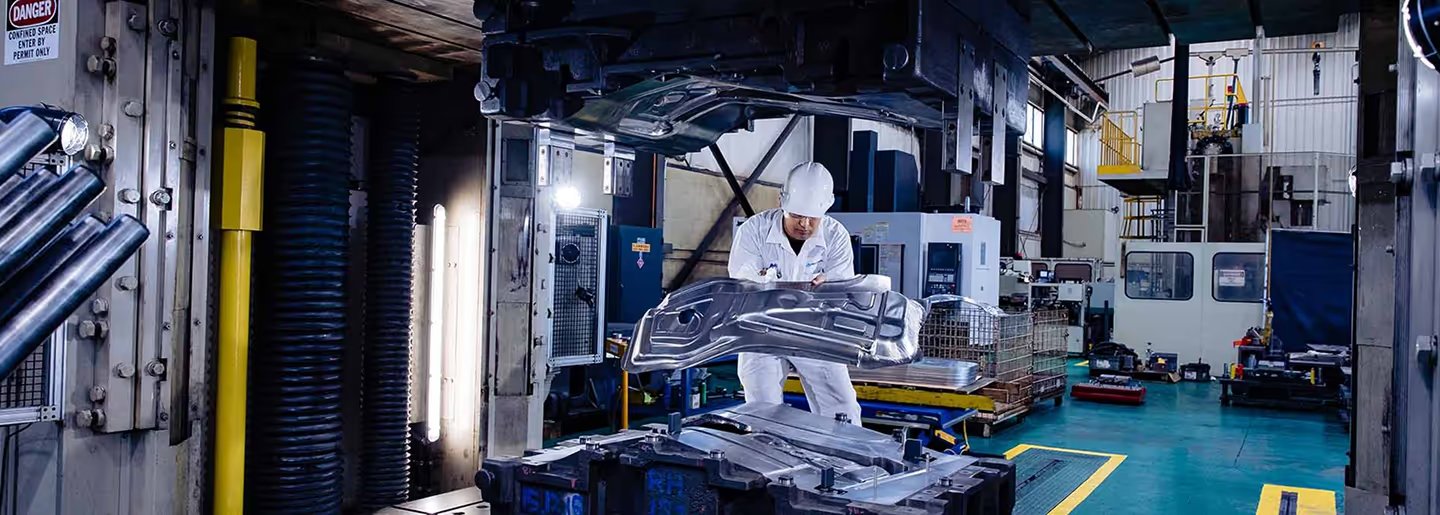
Why Precision Railcar Stamping Is the Backbone of Modern Rail Manufacturing
Precision railcar stamping is a specialized metal forming process that produces high-strength, tight-tolerance components for freight cars, tank cars, and mass transit vehicles. Here is a quick overview of what it involves:
- Process: Metal sheet or coil stock is pressed into shape using dies, achieving tolerances as tight as ±0.0005"
- Key components made: Structural frames, manway covers, brackets, ride control parts, aerodynamic panels, and safety-critical features like door latches and emergency brake components
- Materials used: Cold-rolled steel, stainless steel, draw quality steel, and aluminum alloys
- Why it matters: Rail components must withstand constant mechanical stress, vibration, and long-term wear — standard stamping tolerances are not sufficient
- Quality standard: Leading suppliers hold ISO 9001:2015 certification to meet railroad OEM requirements
Every railcar is made up of hundreds of individual metal parts. Each one must fit precisely, hold up under extreme conditions, and meet strict safety standards. One out-of-tolerance component can affect the performance and safety of an entire railcar. That is why precision stamping — not standard sheet metal fabrication — is the method of choice for serious rail manufacturers.
The rail industry has grown more demanding over time. Class 1 railroads and transit agencies now require parts that are stronger, lighter, and more consistent than ever before. Advanced stamping techniques, in-house tooling, and rigorous quality control have become essential to keeping supply chains on track.
I'm Yoshihiro Hidaka, founder of Hidaka USA, Inc., with over three decades of experience in precision sheet metal fabrication for demanding industries — expertise that directly applies to the exacting standards of precision railcar stamping. In this guide, I'll walk you through everything you need to know about how railcar components are made, what separates precision stamping from standard processes, and what to look for in a manufacturing partner.
Defining Precision Railcar Stamping vs. Standard Metal Stamping
When people think of metal stamping, they often imagine a simple cookie-cutter process. While that might work for basic household goods, the railroad industry operates on a different level entirely. Precision railcar stamping differs from standard stamping in its complexity, material thickness, and microscopic accuracy.
In freight rail applications, components are subjected to massive loads and constant environmental exposure. Standard stamping usually involves looser tolerances—perhaps +/- 0.010". In contrast, precision stamping for rail applications often requires holding tolerances as tight as +/- 0.0005" on critical dimensions. This level of accuracy ensures that parts are perfectly interchangeable and fit into larger assemblies without the need for manual adjustment or "forcing" a fit.
Furthermore, railcar parts often require heavy-gauge materials. We aren't just stamping thin soda cans; we are working with industrial-strength steel that must be formed with immense pressure. This requires specialized hydraulic presses—often ranging from 30 to 700 tons—and sophisticated die designs that can handle the "springback" of heavy metals.
Comparison: Standard vs. Precision Stamping
FeatureStandard Metal StampingPrecision Railcar StampingTypical Tolerances+/- 0.010" to 0.015"+/- 0.001" to 0.0005"Material ThicknessUsually thin (under 0.080")Ranges from 0.003" to 0.250"+ComplexitySimple bends and holesDeep draws, complex geometriesToolingStandard off-the-shelf diesCustom-engineered progressive diesIndustry StandardsGeneral commercial qualityISO 9001:2015 / AWS Certified
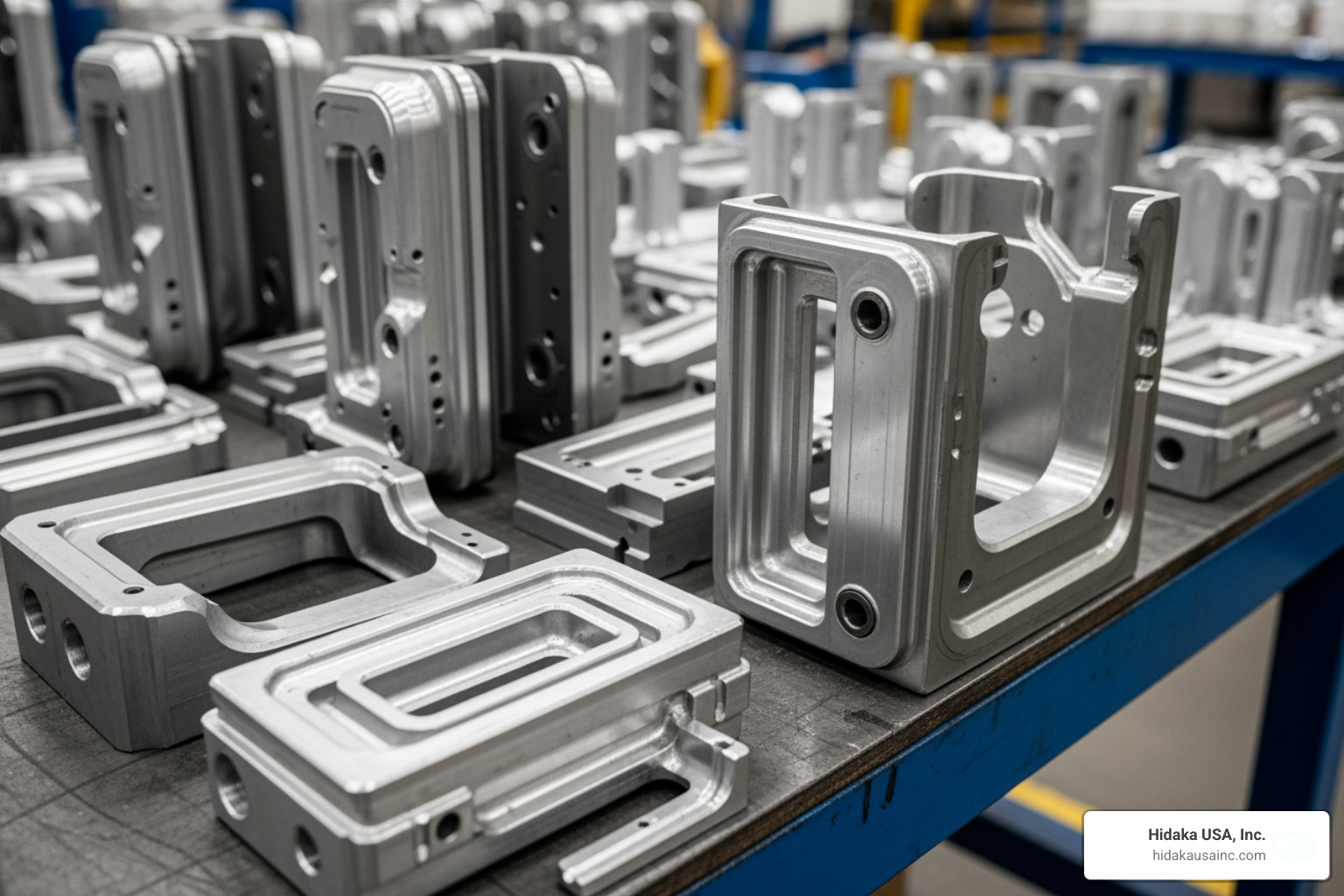
The Role of Precision Railcar Stamping in Safety and Durability
Safety isn't just a buzzword in the rail industry; it's the primary directive. Because railcars endure tremendous forces during transit, every bracket and fitting acts as a safeguard against structural failure.
- Impact Resistance: Stamped components like reinforced metal panels and chassis parts are designed to absorb energy and maintain structural integrity during collisions or derailments.
- Safety Features: Critical safety mechanisms, such as emergency brakes, door latches, and locking assemblies, rely on precision-stamped parts. If a latch is off by a fraction of a millimeter, it might fail to engage properly, leading to a catastrophic safety risk.
- Constant Wear Resistance: Railcars are expected to remain in service for decades. Precision stamping allows for the use of durable alloys that resist the "fatigue" caused by the constant vibration of the tracks.
Enhancing Efficiency with Precision Railcar Stamping
Beyond safety, precision manufacturing is a major driver of cost-effectiveness and performance.
- Weight Reduction: By using advanced engineering and high-strength materials like aluminum or high-draw quality steel, we can produce parts that are lighter without sacrificing strength. Lighter railcars mean better fuel efficiency for the locomotive.
- Aerodynamic Panels: Precision stamping allows us to create streamlined fittings and panels that minimize drag. In the high-speed or long-haul freight world, even a small reduction in wind resistance translates to massive fuel savings over time.
- Maintenance Optimization: When parts are stamped with microscopic precision, they become standardized and interchangeable. This means that when a part eventually wears out, a replacement can be swapped in quickly. This reduces downtime in the maintenance yard, keeping the fleet moving.
Critical Components Produced via Precision Metal Stamping
The variety of parts produced through this process is staggering. From the structural bones of the car to the electrical components that keep it powered, precision railcar stamping touches almost every aspect of the vehicle.
- Structural Frames and Brackets: These are the "glue" that holds the railcar together. Custom brackets support everything from brake lines to interior shelving.
- Manway Covers: Essential for tank cars, these covers must provide a perfect seal to prevent leaks of hazardous materials or pressurized fluids.
- Ride Control Components: Parts like transoms and suspension brackets ensure a smooth ride, protecting both the cargo and the rail infrastructure from excessive vibration.
- Ventilation Shells: Deep-drawn shells are used for fluid containers and ventilation systems, requiring complex shapes that maintain uniform wall thickness.
- Mass Transit Specifics: For commuter rail, we produce third rail components, switching devices, and presence detectors. These parts often feature electrical housings that must protect sensitive electronics from the elements.
- Wayside Equipment: It's not just the cars; stamping is also used for specialized railway equipment needs like rail crossing structure frames, ladders, and gates.
Advanced Manufacturing and Material Science in Rail
To achieve these results, we don't just rely on the press. We integrate a suite of advanced technologies.
Material SelectionChoosing the right metal is the first step in engineering success.
- Stainless Steel: Chosen for its incredible corrosion resistance and aesthetic appeal. It contains at least 10.5% chromium, which forms a self-repairing oxide film.
- Aluminum Alloys: Ideal for lightweighting initiatives in mass transit.
- Draw Quality Steel: Used for complex "deep draw" parts where the metal must be stretched into a cup or shell shape without tearing.
For a deeper overview of the broader stamping discipline (including common methods and terminology), see Metal stamping.
Advanced CapabilitiesModern facilities utilize more than just a hammer and anvil.
- 5-Axis Laser Cutting: This allows us to trim stamped parts with extreme accuracy, creating complex 3D shapes that would be impossible with traditional trimming dies.
- Robotic Welding: To ensure consistency in large assemblies, robotic welding provides a level of repeatability that human hands simply can't match over high-volume runs.
- Wire EDM: This process is perfect for creating complex shapes from hardened tool steel. It provides a burr-free finish and allows us to create the incredibly precise dies needed for the stamping process itself.
For those looking to move from a concept to a full-scale fleet, our mass production services provide the scalability needed to handle thousands of units while maintaining that "one-part-at-a-time" precision.
Quality Control and Tolerances in Precision Railcar Stamping
Quality control is the heartbeat of our operation. In a high-stakes industry like rail, "close enough" is never good enough.
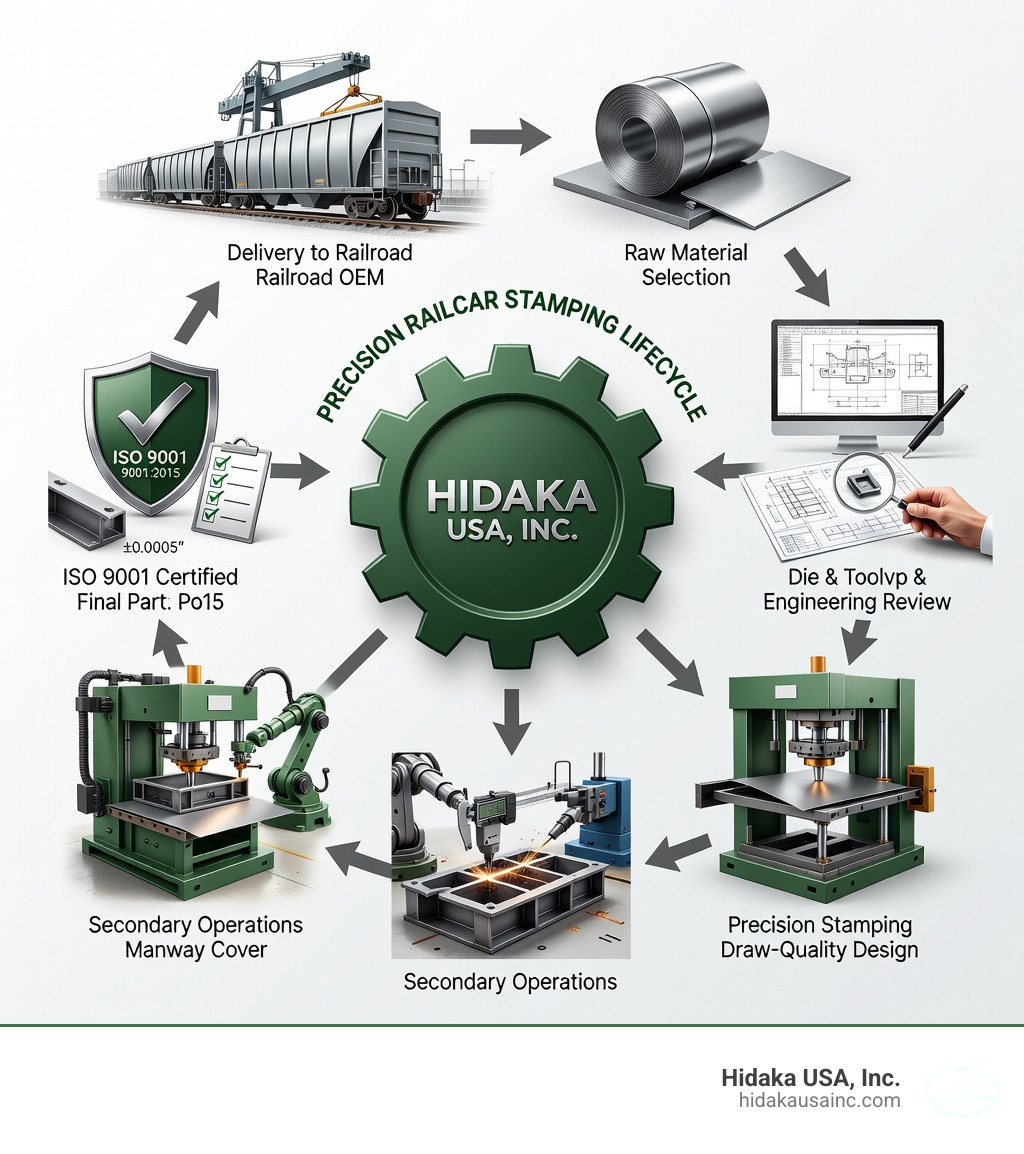
We adhere to rigorous standards, including ISO 9001:2015 certification. This ensures that every step of our process-from the moment raw material enters our 95,000-square-foot facility in Dublin, Ohio, to the moment the finished part is shipped-is documented, measured, and verified.
In-House Tooling and Die DesignOne of the most critical factors in maintaining quality is having an in-house toolroom. When we design and build our own progressive dies, we have total control over the precision of the tool. If a tool needs a slight adjustment to account for a specific material's reaction to pressure, our engineers can handle it immediately. This reduces downtime and ensures that the final part matches the customer's CAD design exactly.
Prototyping and Engineering AnalysisBefore we hit "start" on a mass production run, we utilize prototyping services to validate the design. By performing engineering analysis on how the material reacts to force, we can predict potential failure points and optimize the part for both strength and manufacturability.
For more on early-stage validation, see our prototyping services.
Frequently Asked Questions about Railcar Stamping
What materials are best for railcar components?
The "best" material depends on the application. For components exposed to the elements or corrosive chemicals (like those in tank cars), stainless steel is the gold standard. For structural components where strength-to-weight ratio is the priority, high-strength carbon steel or aluminum alloys are preferred. Carbon steel is often the choice for general-purpose brackets due to its cost-effectiveness and durability.
Why is in-house tooling important for rail projects?
In-house tooling is a game-changer for three reasons:
- Speed: We don't have to wait for an outside vendor to fix or modify a die.
- Precision: Our toolmakers work directly with our stamping team, ensuring the die is perfectly tuned to our specific presses.
- Cost: It eliminates the markup of third-party tool shops and allows for rapid "tooling adaptation" if a design changes mid-project.
How does stamping improve railcar maintenance?
Stamping produces identical parts every single time. In the old days, parts might have been hand-fabricated, meaning every replacement required custom fitting. With precision railcar stamping, a maintenance crew in a different state can order a standardized part and know it will bolt on perfectly. This interchangeability drastically reduces repair time and simplifies the entire supply chain for the freight rail industry.
Conclusion
At Hidaka USA, Inc., we understand that the rail industry is the literal engine of the global economy. Whether it is moving freight across the country or commuters across a city, the reliability of that movement depends on the quality of the parts beneath the floorboards.
Since 1989, we have focused on providing American-made quality from our home in Ohio. By combining our ISO 9001 certified processes with advanced 3D laser cutting, hydraulic pressing, and AWS certified welding, we offer a comprehensive solution for even the most complex rail projects. We don't just make parts; we engineer solutions that ensure safety, efficiency, and longevity.
If you are looking for a partner who understands the microscopic details of the railroad industry, we invite you to partner with a specialized railcar stamping manufacturer and see how we can move your project forward, one precision part at a time.