Fast and Furious: Motorsports Prototype Precision Cutting


Why Automotive Laser Cut Prototypes Are Essential for Modern Vehicle Development
Automotive laser cut prototypes are pre-production parts made by directing a focused beam of light through sheet metal or other materials to produce precise, complex shapes — without the need for expensive hard tooling.
Here is a quick overview of what you need to know:
| Topic | Key Facts |
|---|---|
| What they are | Pre-production parts cut by CNC-controlled laser beam, used to validate designs before full manufacturing |
| Typical volumes | 50 to 500 parts for prototype orders |
| Achievable tolerances | As tight as ±0.002" to ±0.005" |
| Common materials | Steel, aluminum, stainless steel, titanium, boron, copper |
| Lead times | As fast as 24 hours to a few business days |
| Key advantage | No tooling required — design changes are fast and low-cost |
| Typical applications | Body-in-White panels, chassis parts, brackets, heat shields, EV battery components |
The automotive industry runs on precision, speed, and safety. When engineers need to test a new bracket, validate a body panel design, or put a component through crash testing, waiting weeks for a stamping die is not an option. Laser cutting removes that bottleneck entirely. A design file can go from a CAD drawing to a finished metal part in hours, not weeks — allowing teams to iterate quickly and get vehicles to market faster.
This speed advantage is especially critical in motorsports and high-performance vehicle development, where design cycles are compressed and every component must perform under extreme conditions.
I'm Yoshihiro Hidaka, founder of Hidaka USA, Inc., and I have been supplying automotive laser cut prototypes and sheet metal fabrication services to the automotive industry since 1989. My background spans both Japanese and American manufacturing, giving me a practical, ground-level understanding of what engineers and production teams need from a prototyping partner.

Basic automotive laser cut prototypes vocab:
The Role of automotive laser cut prototypes in Modern Manufacturing
In the high-stakes world of automotive manufacturing, the transition from a digital concept to a physical part is where the real work happens. We use automotive laser cut prototypes as the primary bridge in this journey. These pre-production parts allow us to test fit, form, and function without the massive upfront investment of hard tooling.
Tooling-Free Design Validation
Traditional manufacturing often relies on stamping dies. If you want to change the diameter of a hole or the curve of a flange in a stamped part, you might have to spend thousands of dollars and weeks of time modifying a heavy steel die. With laser cutting, we simply update the CNC program. This "tooling-free" nature makes it the ultimate tool for design validation. Whether we are producing a batch of 50 or 500 parts, the cost per part remains manageable because there are no "sunk" costs in hardware.
Managing Variants and Individualization
Modern vehicle programs are increasingly complex. Consumers want options, and engineers have to manage dozens of variants for a single vehicle model. We see this often in car body construction, where different trim levels might require different antenna holes, bushings, or mounting points for exterior parts.
By utilizing laser cutting, manufacturers can integrate these variants into the production process as late as possible. Instead of having ten different stamping dies for ten different roof panels, a manufacturer can stamp one universal panel and use a 5-axis laser to cut the specific holes needed for each variant. This is not just efficient; it is economically essential for modern "just-in-time" (JIT) workflows.
Safety and Performance Testing
Before a new vehicle hits the road in Dublin, Ohio, or anywhere else, it must prove it can protect its passengers. Automotive laser cut prototypes are frequently used to build "test mules" or Body-in-White (BIW) assemblies for crash testing. Because laser cutting maintains the structural integrity of advanced materials like high-strength steel and boron, these prototypes provide accurate data on how a production vehicle will perform in an impact.
Technical Advantages: Why Laser Cutting Wins the Race
When we talk about motorsports and high-performance vehicles, "good enough" is never good enough. The technical advantages of laser cutting give it a significant lead over traditional methods like sawing, plasma cutting, or even waterjet cutting in specific scenarios.
Unmatched Precision for Intricate Geometries
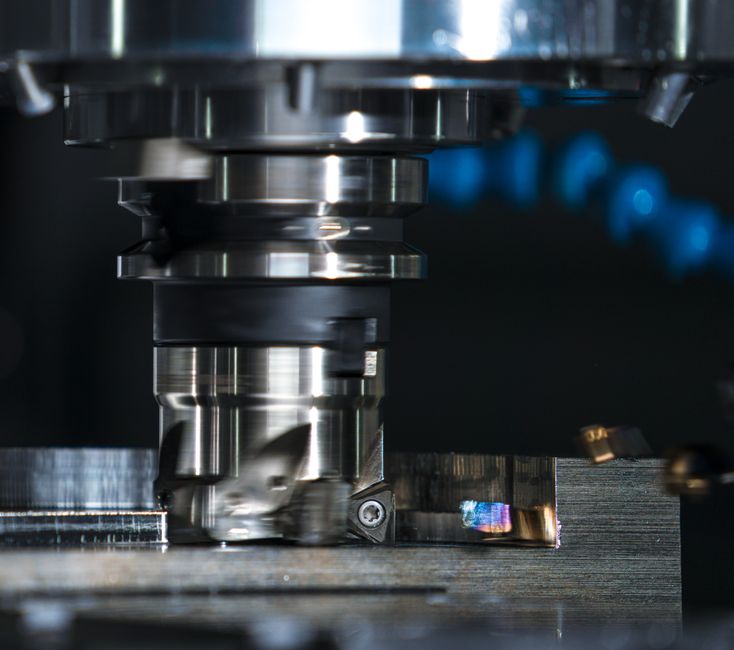
Laser cutting technology, particularly fiber lasers, can achieve exceptionally precise dimensions. In our experience, we can maintain tolerances as tight as ±0.005”, and in some high-precision applications, we can even reach ±0.002”. This level of accuracy is vital for components like engine cradles, transmission brackets, and intricate gaskets where even a fraction of a millimeter can lead to assembly failure or mechanical issues down the line.
Speed and Efficiency
Time is the one resource we can’t manufacture more of. Laser cutting is up to 30 times faster than traditional sawing. When you consider that some modern fiber optic laser systems can reach travel speeds of up to 50 meters per minute, it’s clear why this technology is the backbone of rapid prototyping.
5-Axis CNC: Cutting in Three Dimensions
While 2D laser cutting is great for flat brackets and plates, 3D components—like formed pillars, floor pans, and hydroformed tubes—require something more advanced. A 5-axis CNC laser system allows us to cut complex 3D automotive components without repositioning the part. This ensures that every hole and trim line is perfectly aligned with the part's geometry, eliminating the need for secondary manual trimming operations.
Minimal Material Distortion and Superior Edge Quality
Because laser cutting is a non-contact process, there is no mechanical force being applied to the metal. This prevents the warping or "bowing" often seen with mechanical shearing or stamping. Furthermore, when we use nitrogen as a process gas, we achieve a burr-free, "bright" edge that is free of oxidation. This is critical for parts that will later be welded, as oxidation can compromise the quality of the weld.
Material Versatility for High-Performance Components
One of the reasons we love laser cutting for automotive laser cut prototypes is its ability to handle almost any material we throw at it. From the heavy steel used in truck frames to the delicate foils used in electric vehicle batteries, the laser is a universal tool.
Engineering automotive laser cut prototypes for Strength
In the quest for better fuel efficiency and crash safety, the automotive industry has moved toward advanced materials.
- High-Strength Steel (HSS) and Boron: These materials are incredibly tough—so tough, in fact, that they can quickly wear out traditional drill bits and stamping dies. Laser cutting handles them with ease, making it the go-to for structural components like A-pillars, B-pillars, and roof rails.
- Aluminum Alloys: Used extensively for lightweighting body panels and engine components. Fiber lasers are particularly effective here because they can handle the reflective nature of aluminum without damaging the machine.
- Stainless Steel: Essential for exhaust systems and thermal shields where corrosion resistance and heat management are paramount.
Optimizing automotive laser cut prototypes for E-Mobility
The shift toward electric vehicles (EVs) has opened up a whole new frontier for laser cutting.
- Battery Foils: We use lasers to separate coated copper and aluminum foils in battery production. Because the process is contactless, there is no risk of damaging the sensitive surface coatings.
- Busbars and Connectors: High-conductivity copper is a staple in EV power systems. Lasers allow for the precise cutting of these components with minimal heat-affected zones (HAZ), ensuring maximum electrical efficiency.
- EV Enclosures: Protecting the battery pack requires robust, lightweight housings. Laser cutting allows us to prototype these complex enclosures quickly, testing different cooling port configurations and mounting points.
From CAD to Track: The Prototyping Workflow
How do we actually get a part from a computer screen to a race track? The workflow for automotive laser cut prototypes is designed for speed and material optimization.
The Digital Start
It all begins with a CAD file, typically in a .dxf or .step format. Our engineering team reviews these files to ensure they are optimized for the laser cutting process. We look at things like "kerf" (the width of the cut) and the "heat-affected zone" to make sure the final part meets the design intent.
Material Utilization and Nesting
Metal isn't cheap, especially high-performance alloys. We use advanced nesting software to arrange parts on a sheet of metal like a high-tech jigsaw puzzle. This maximizes material utilization and reduces waste, which is not only cost-effective but also contributes to the sustainability of the manufacturing process.
Quality Control and PPAP
In the automotive world, quality isn't just a goal; it's a requirement. At Hidaka USA, Inc., we maintain an ISO 9001-compliant quality management system. For many of our automotive clients, we follow the Pre-Production Approval Process (PPAP). This involves rigorous inspection and documentation to prove that our automotive laser cut prototypes meet every single specification before they are approved for use in test vehicles or low-volume production.
Frequently Asked Questions about Automotive Laser Cutting
What are the thickness limitations for laser-cut prototypes?
While lasers are incredibly powerful, they do have limits. Most industrial fiber lasers are optimized for materials between 0.024" and 0.500" (about 12mm) thick. While some high-wattage systems can cut up to 1 inch of steel, the edge quality and precision tend to decrease as the material gets thicker. For most automotive applications—like body panels and structural brackets—the material is well within the "sweet spot" of the laser's capability.
How does laser cutting support just-in-time (JIT) manufacturing?
Because there is no "setup" in the traditional sense (no dies to install or tools to sharpen), laser cutting is incredibly flexible. If a production line in Ohio needs a batch of revised brackets by tomorrow morning, we can program the laser and start cutting immediately. This agility is what makes JIT manufacturing possible in a high-variance environment.
What surface finishes are available for laser-cut parts?
Laser-cut parts are often ready to use "out of the box," but we offer several finishing options to meet specific automotive standards:
- Powder Coating: Provides up to 1,000 hours of salt spray protection, perfect for underbody components.
- Anodizing: Used for aluminum parts to increase corrosion resistance and surface hardness; can withstand up to 5,000 hours of salt spray.
- Electropolishing: Can improve surface roughness by up to 60%, which is often required for stainless steel exhaust components to reduce surface imperfections and improve flow.
- Deburring: Every part we ship is deburred to ensure it is safe to handle and ready for assembly.
Conclusion
At Hidaka USA, Inc., we believe that the best way to predict the future of a vehicle is to build it. Based in Dublin, Ohio, our 95,000-square-foot facility is dedicated to helping the automotive, mass-transit, and motorsports industries move from concept to reality with unmatched speed and precision.
Our team doesn't just cut metal; we provide a comprehensive manufacturing solution. From 2D and 3D laser cutting to hydraulic pressing, welding (AWS certified), and advanced engineering analysis, we ensure that every one of our automotive laser cut prototypes is a high-quality, American-made product.
Whether you are working on a new EV platform, a high-performance racing chassis, or a mass-transit railcar, we have the technology and the experience to help you cross the finish line first.
For more information about our prototyping services and how we can support your next project, visit our Prototyping Page.