Find US Prototype Manufacturers: A Step-by-Step Guide

Source American Made Prototype Parts With Less Risk
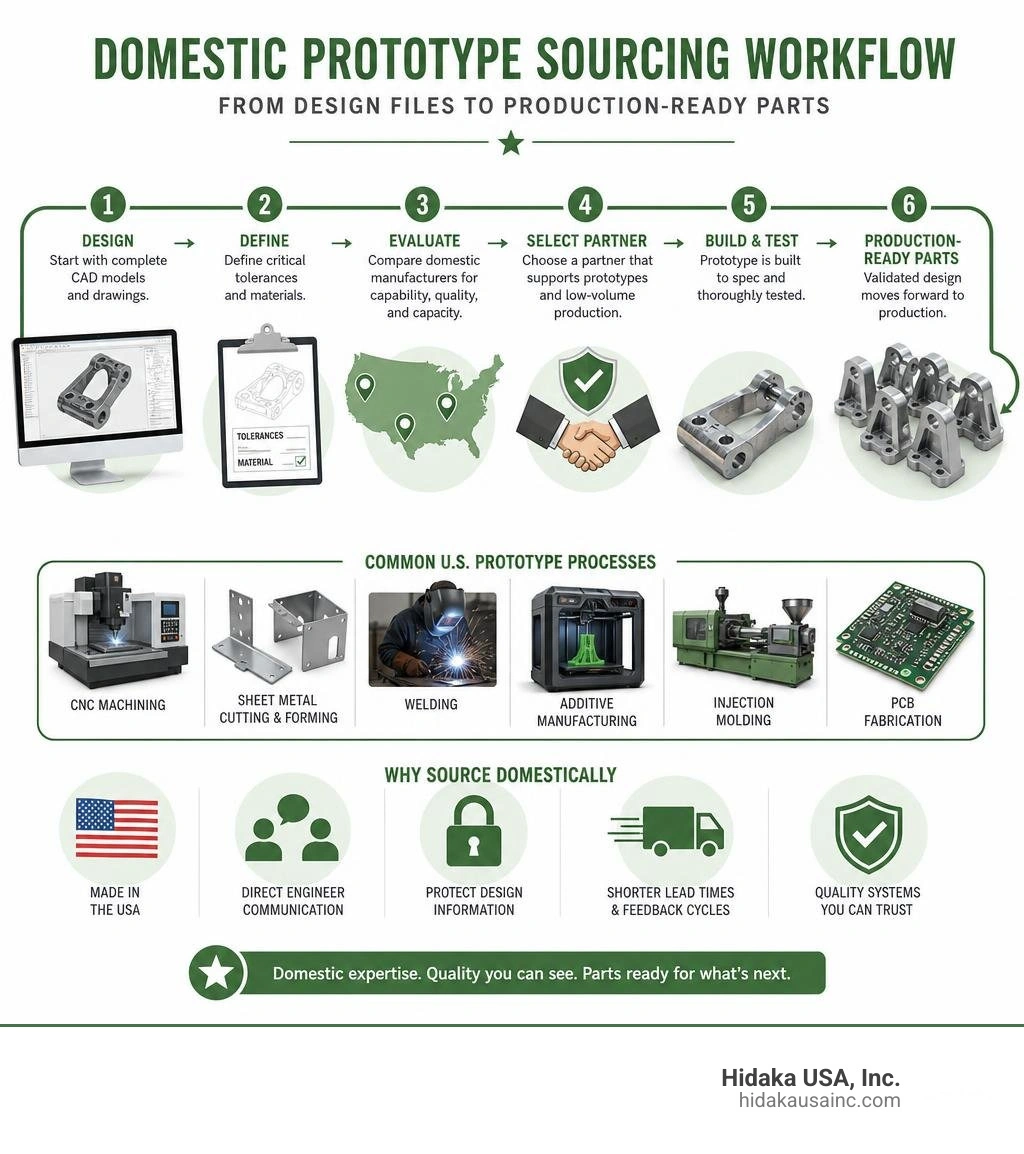
To source American made prototype parts, begin with complete CAD models and drawings, define critical tolerances and materials, then compare domestic manufacturers for process capability, quality controls, and production capacity. Choose a partner that can support both prototype builds and low-volume production so validated designs can move forward with fewer handoffs.
Domestic sourcing can help automotive manufacturers shorten feedback cycles, communicate directly with engineers, protect design information, and avoid customs-related delays. Common U.S. prototype processes include CNC machining, sheet metal cutting and forming, welding, additive manufacturing, injection molding, and PCB fabrication. The best process depends on the part's material, required tolerance, testing needs, and expected production volume.
For reliable results, look for documented quality systems, material traceability, inspection capability, and relevant certifications such as ISO 9001. Early design-for-manufacturability review is also important: it can identify difficult features before material is cut and make later production easier.
I am Yoshihiro Hidaka, founder of Hidaka USA, Inc., and I have worked in U.S. prototype and production manufacturing since founding the company in 1989. My experience supplying automotive prototype and production components informs this guide to finding dependable American made prototype parts.
Simple American made prototype parts glossary:
- prototype manufacturing Dublin Ohio
- metal prototyping for startups
- custom prototype engineering solutions
1. Define Design Specifications and Technical Requirements for American Made Prototype Parts
Getting an accurate part starts long before a machine spindle turns or a laser powers up. Setting your project up for success begins with translating your concept into clear, unambiguous engineering data. When you set out to learn how to start prototyping project workflows effectively, precise documentation is the primary foundation that protects your budget and schedule.
Industry-standard ASME Y14.5 geometric dimensioning and tolerancing (GD&T) removes ambiguity between design intent and physical manufacturing. By defining functional datums, critical feature relationships, and realistic tolerances early, you ensure your supplier builds exactly what your system needs. Engaging your domestic fabricator during the 3D computer-aided design (CAD) modeling phase enables comprehensive Design for Manufacturability (DFM) feedback. Early DFM reviews flag tight inside radii, thin wall sections, or unneeded tight tolerances that needlessly drive up cycle times.
Selecting the exact material grade is just as crucial. Choosing standard production-grade alloy specifications—such as 6061-T6 aluminum, 304 stainless steel, or high-strength automotive sheet metals—ensures your prototype provides valid data during physical stress testing and environmental trials.
Preparing CAD Models and 2D Drawings for American Made Prototype Parts
To streamline quotes and production, supply your fabricator with clean 3D CAD models in neutral formats like STEP or IGES alongside fully dimensioned 2D vector drawings. A comprehensive technical drawing package communicates what 3D solids cannot: internal thread callouts, surface finish values, heat-treatment requirements, and critical GD&T datums.
Understanding how to prototype metal parts with tight tolerances means verifying dynamic clearances across multi-component assemblies. Ensure your Bill of Materials (BOM) specifies exact alloy grades, fastener hardware, and coating specifications. Clear, structured files eliminate guesswork, allowing machinists and press operators to proceed directly to programming.
Selecting the Right Manufacturing Processes for American Made Prototype Parts
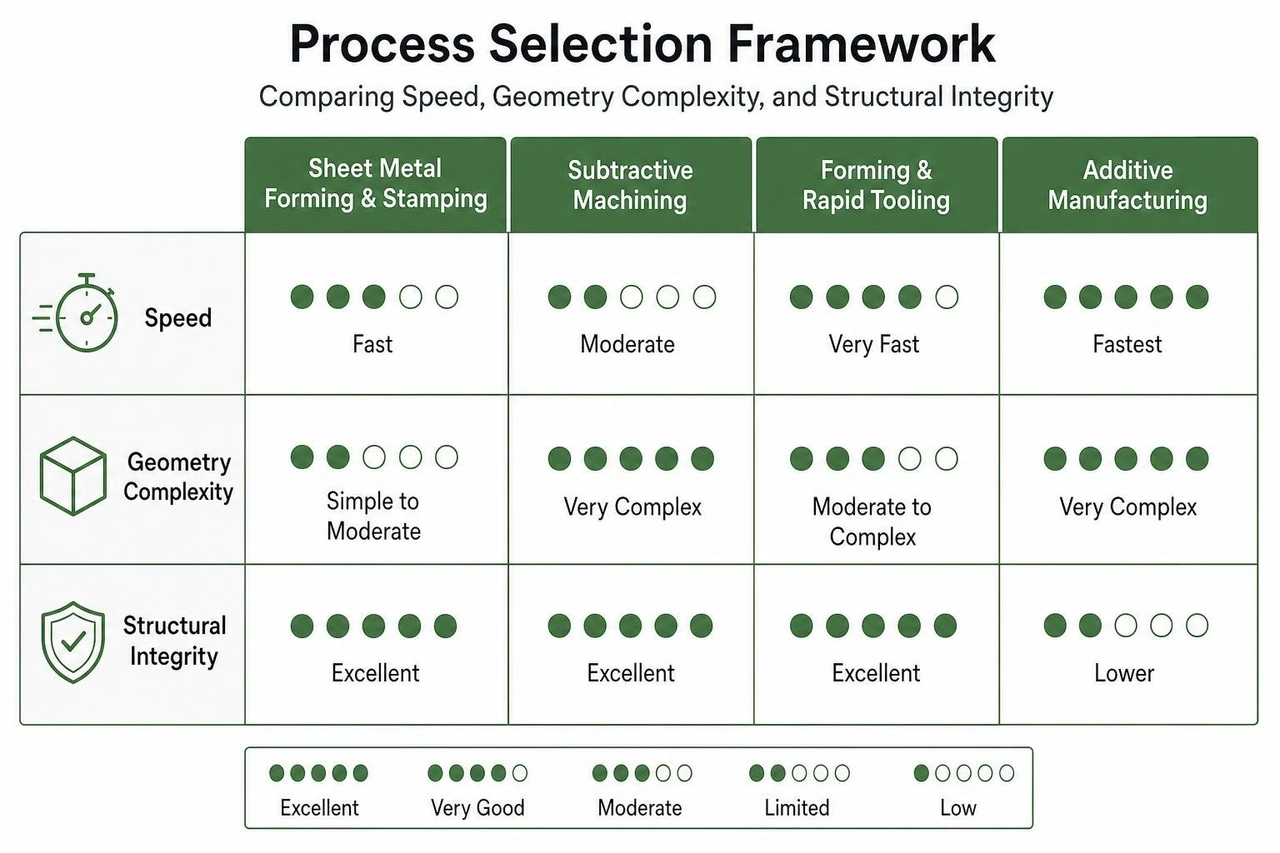
Choosing the optimal fabrication method depends directly on geometry, structural requirements, and production volume targets:
- Sheet Metal Forming & Stamping: Ideal for brackets, enclosures, and structural panels. Utilizing prototype sheet metal fabrication with soft tooling or hydraulic press brakes gives you production-representative structural characteristics without hard-tooling commitments.
- Subtractive Machining: High-precision 3-axis and 5-axis prototype machining cuts complex geometries, billet housings, and tight-tolerance interfaces down to thousandths of an inch.
- Forming & Rapid Tooling: Combining multi-axis laser cutting with modular press forming enables true rapid metal prototyping that mirrors mass-production stamping.
- Additive Manufacturing: Useful for rapid visual concepts and non-load-bearing design mockups before cutting metal.
2. Evaluate Capabilities and Equipment of Domestic Prototype Fabricators

A top-tier domestic facility houses advanced fabrication technologies under one roof. When evaluating an American manufacturing partner, review their primary machinery lineup, maximum working envelopes, and forming tonnages.
Advanced facilities utilize high-power 2D and 3D fiber lasers alongside multi-axis machining centers to handle complex contours and deep-drawn components. Leveraging dedicated prototype laser cutting services allows fabricators to trim pre-formed, three-dimensional stamped parts with extreme accuracy. When assemblies require joined sub-components, partnering with a supplier capable of AWS certified prototype welding ensures every structural joint, TIG weld, and robotic MIG bead maintains weld penetration and structural integrity.
Quality Control Systems and Certifications
Certifications separate reliable manufacturing partners from casual job shops. A mature quality system guarantees that process controls remain consistent across every prototype build and revision.
- ISO 9001:2015: A robust quality management standard. The real ISO 9001 prototyping benefits center around standardized calibration, raw material traceability, documented corrective actions, and consistent production outcomes.
- AS9100D & ITAR Compliance: Critical for aerospace and defense projects requiring strict data security, controlled handling, and specialized aerospace quality tracking.
- CMM Metrology: In-house coordinate measuring machines (CMM) and laser scanning arms provide comprehensive dimensional verification against your original CAD models.
Industry-Specific Prototyping Experience
Look for a manufacturing partner with deep, practical experience in your specific industry. Sector-specific knowledge prevents costly missteps when designing for real-world environments:
- Automotive & EV Mobility: Trusted automotive metal prototype specialists understand structural crash components, battery enclosures, chassis brackets, and strict PPAP validation requirements.
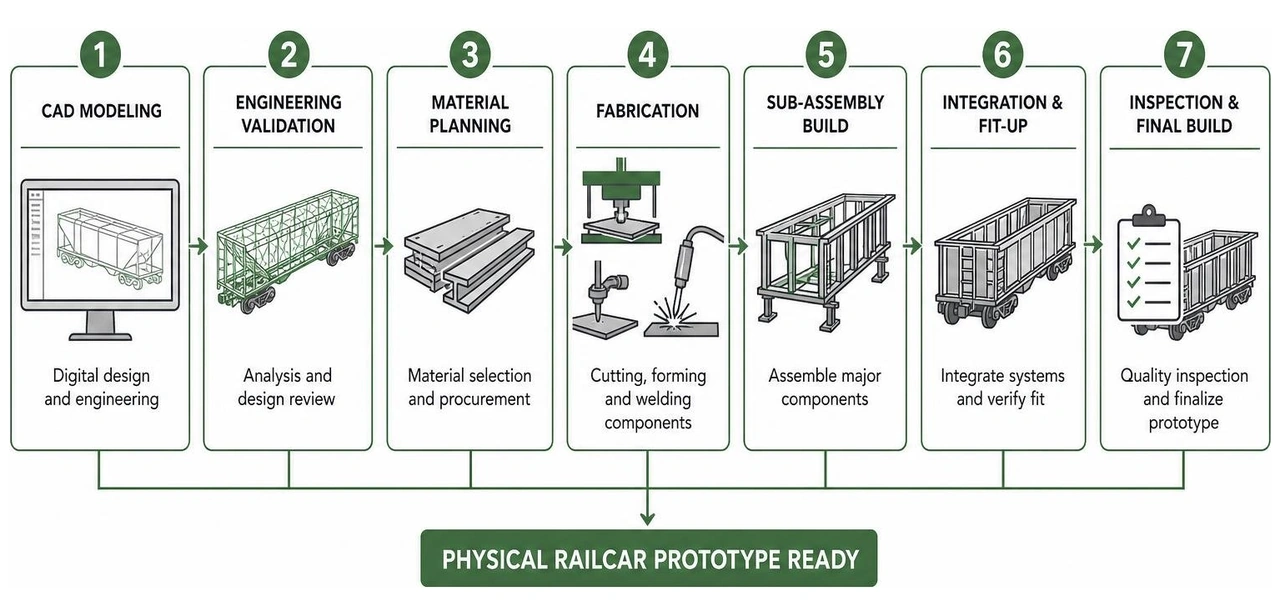
- Mass-Transit Railcars: Requires heavy-gauge metal forming, structural integrity, and weldments capable of withstanding constant vibration.
- Motorsports: Demands rapid turnaround of lightweight, high-strength suspension, and powertrain brackets under tight racing schedules.
- Industrial & Medical Equipment: Demands precision enclosures, biocompatible alloy handling, and strict dimensional tolerances.
3. Compare Costs, Turnaround Times, and Domestic Value

When calculating the budget for prototype builds, looking only at the piece-part price creates a false economy. Offshore parts may seem cheaper on paper, but international shipping, customs brokerage fees, lengthy transit delays, and communication barriers quickly inflate your total cost of ownership.
Implementing smart prototyping cost reduction strategies involves standardizing material gauges, minimizing custom tooling requirements, and designing around off-the-shelf fasteners. American manufacturers save you substantial capital by eliminating weeks of ocean transit. Fast domestic freight and shared time zones allow your engineering team to iterate, test, and adjust designs in days rather than months.
On-Demand Platforms vs. Full-Service Contract Fabricators
Digital quoting brokers rely on automated algorithms to route your parts through third-party networks, which can result in inconsistent quality across revision runs. In contrast, partnering with a full-service domestic facility gives you direct access to dedicated toolmakers and manufacturing engineers.
Through custom prototype engineering solutions, our engineering team collaborates directly with yours. We design custom modular fixturing, offer real-time feedback on sheet metal bend radii, and optimize tool paths to keep your project on schedule.
4. Validate Prototype Quality and Plan the Production Scale-Up
Once your prototype parts arrive, thorough validation ensures every physical dimension matches your performance requirements. A disciplined approach to how to evaluate prototypes combines First Article Inspection (FAI) reports with physical form-fit-function assembly checks and destructive stress testing.
Validating parts with production-intent processes creates a clear path for prototype production scale up. When your prototype uses the same forming, stamping, and welding methods planned for mass production, you bypass costly re-engineering steps and scale into low-volume manufacturing smoothly.
Frequently Asked Questions About Sourcing Domestic Prototypes
What are the main benefits of sourcing prototype parts in the United States over overseas shops?
Sourcing domestically shortens lead times, provides direct access to fabrication engineers within your time zone, ensures full intellectual property protection under U.S. law, eliminates customs delays, and guarantees verified domestic material traceability.
What quality certifications should I look for in an American prototype manufacturer?
Look for ISO 9001:2015 certification for quality management, American Welding Society (AWS) certified welders for structural assemblies, and AS9100D or ITAR registration if your components support aerospace or defense applications. Detailed CMM inspection reports should accompany physical deliveries.
How do I transition smoothly from rapid prototyping to low-volume production?
Choose a manufacturing partner with both prototype and mass-production infrastructure under one roof. Using production-grade alloys, modular soft tooling, and shared quality inspection standards during the prototype phase allows seamless scaling into low-volume runs without redesigning parts.
Conclusion
Sourcing your prototype components domestically provides the speed, quality, and engineering collaboration required to launch complex products with confidence. By defining detailed technical specifications, selecting the right manufacturing processes, and vetting your supplier's equipment and quality systems, you substantially reduce development risk.
At our Ohio metal prototype facility, Hidaka USA, Inc. brings over 35 years of engineering and manufacturing excellence to your projects. Operating from our 95,000-square-foot facility in Dublin, Ohio, we offer complete end-to-end capabilities spanning 2D/3D laser cutting, hydraulic press forming, AWS-certified welding, and comprehensive CMM quality inspection.
Whether you need rapid metal prototypes or a seamless bridge to mass production, explore our precision prototyping solutions and mass production services to bring your next design to life. Visit Hidaka USA, Inc. today to request a comprehensive engineering review and quote.